
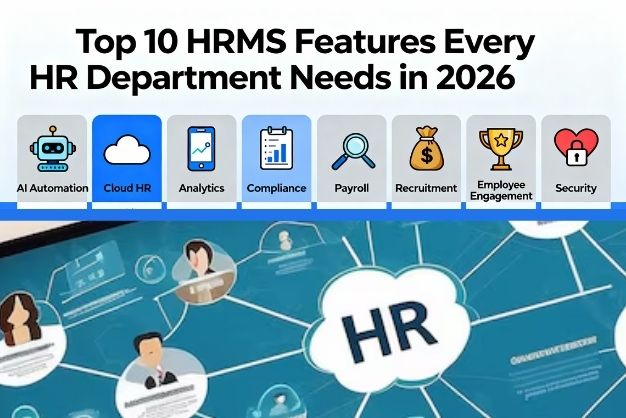
The HR landscape is changing faster than ever. With hybrid and remote work now the norm, multi-location teams expanding, and compliance becoming more complex across industries, HR leaders are rethinking how they operate.
In 2026, HRMS is no longer a support tool; it’s the backbone of digital HR transformation. Organizations are prioritizing automation, people analytics, and employee experience more than ever. Whether you’re upgrading your system or buying one for the first time, this guide gives you the ultimate checklist of what your HRMS must include.
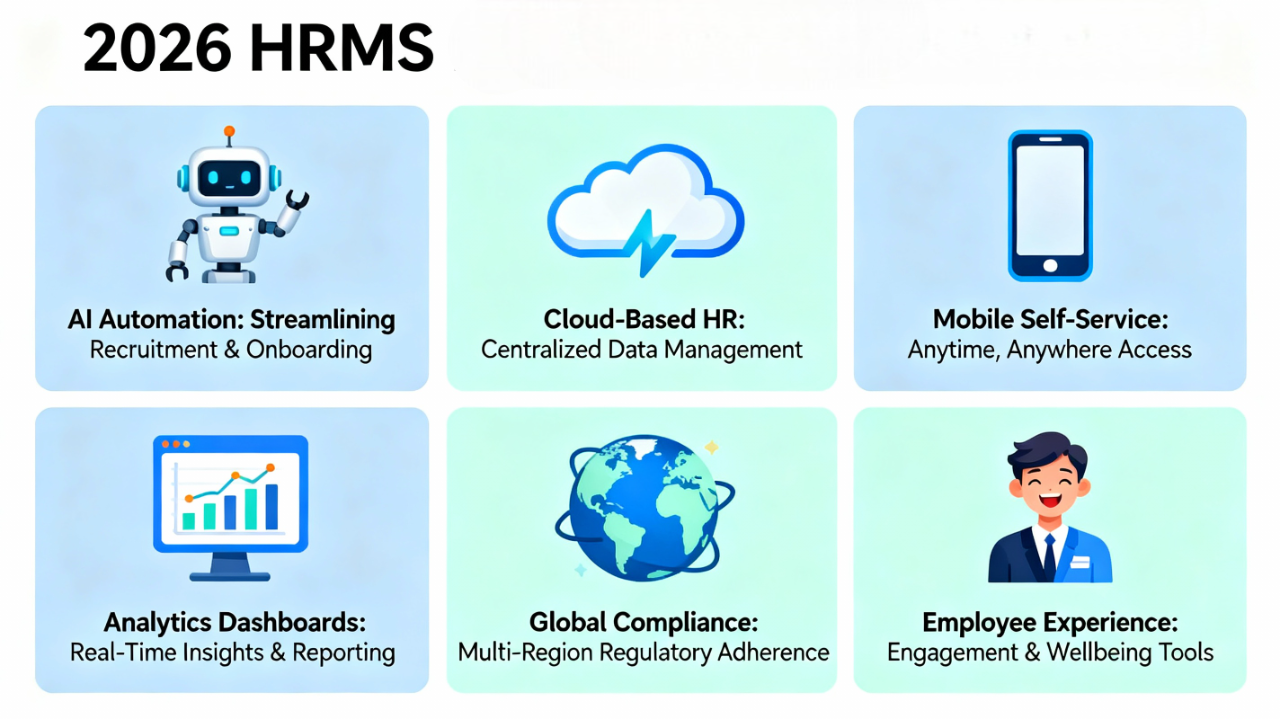
Why HRMS Matters More Than Ever in 2026
Modern HR teams are under pressure to deliver speed, accuracy, compliance, and great employee experiences all at once. This is exactly where HRMS becomes mission-critical.
The shift to hybrid and remote-first workplaces
Teams now work across cities, time zones, and even countries. Without a robust digital HR stack, managing such a distributed workforce becomes nearly impossible.
Rising complexity of labour laws and compliance
Frequent changes in PF, ESI, minimum wages, TDS, GDPR, and state-level regulations require HR to maintain flawless accuracy. HRMS ensures compliance by automating statutory calculations and maintaining audit-ready records.
Need for real-time HR data and people analytics
Leaders expect instant insights on hiring, performance, attrition, and workforce costs. HRMS delivers this through dashboards, predictive analytics, and smart reporting.
-
Unified Employee Database & Core HR
A modern HRMS starts with a single source of truth for your entire workforce. No more spreadsheets, duplicate records, or missing documents everything lives in one place.
What this includes:
- 360° employee profiles: personal info, job details, documents, performance history, payroll, and more
- Digital document storage and KYC management
- Automated HR master data management for consistency and compliance
This centralized HR data improves decision-making, eliminates errors, and gives HR leaders real-time visibility.
-
Employee Self-Service (ESS) & Manager Self-Service
In 2026, employees expect the same convenience from HR that they get from banking or food delivery apps. ESS and MSS reduce HR workload while elevating employee experience.
Common ESS/MSS actions:
- Apply for leave
- Update KYC documents
- Download payslips & tax statements
- View attendance
- Raise HR requests
- Request employment letters (NOC, experience letter, etc.)
With self-service, HR teams cut ticket volumes by 40–60% and improve turnaround times instantly.
-
Time, Attendance & Smart Leave Management
Accurate time tracking is essential for payroll, compliance, and productivity, especially with remote and field teams.
Modern systems offer:
- Biometric, RFID, and facial recognition check-ins
- Web & mobile attendance with geo-fencing
- Shift scheduling and roster automation
- Automated leave policies
- Integration with payroll for error-free salary processing
This ensures transparency, prevents time theft, and standardizes attendance processes across locations.
-
Payroll Automation with Statutory Compliance
Payroll in 2026 is far too complex for manual processing. HRMS with payroll automation ensures accuracy, timeliness, and full compliance.
Key payroll features:
- Automated salary calculations
- PF, ESI, PT, TDS, LWF, and gratuity compliance (India-specific)
- TDS proofs and Form 16
- Full & Final Settlement (FnF)
- Auto-generated payslips
- Reimbursement and claims management
This eliminates manual calculations, reduces errors, and ensures your organization stays compliant every month.
-
Recruitment, ATS & Seamless Onboarding
Hiring in 2026 demands speed, structure, and automation. An HRMS with an integrated ATS streamlines the entire hiring lifecycle.
ATS capabilities:
- Job postings to multiple job boards
- Resume parsing & candidate ranking
- Interview scheduling workflows
- Automated offer letters
Digital onboarding features:
- Paperless document collection
- E-signature support
- IT access provisioning
- Automated induction tasks
- Welcome kits and checklists
This ensures a delightful first-day experience and reduces onboarding time by up to 70%.
-
Performance Management, OKRs & Continuous Feedback
The world has moved beyond annual reviews. Today, organizations thrive on continuous performance management powered by real-time feedback.
Key features:
- OKRs & goal tracking
- KRAs and competency mapping
- 360-degree feedback
- Quarterly and annual appraisal cycles
- Talent reviews & succession plans
This creates a culture of accountability and growth aligned with business outcomes.
-
Learning, Skills & Career Development
Upskilling is non-negotiable in 2026. A powerful HRMS integrates learning and development into day-to-day workflows.
Core L&D features:
- Training management
- LMS integration
- E-learning courses
- Skill matrices & gap analysis
- Certification tracking
This helps HR identify future leaders, bridge skill gaps, and build a stronger workforce.
-
Advanced HR Analytics & Dashboards
Real-time dashboards give leadership instant visibility across the employee lifecycle.
Common insights:
- Headcount & hiring trends
- Attrition analytics
- Attendance & overtime reports
- Performance insights
- Compensation data
AI-powered predictive analytics now forecast attrition risk, hiring needs, and workforce capacity, helping HR leaders make proactive decisions.
-
Mobile-First HRMS & Remote Workforce Management
By 2026, HR is mobile by default. Employees and managers expect to access HR tools anytime, anywhere.
Mobile HR app features:
- Leave & attendance
- Payslips and documents
- Approvals on the go
- Push notifications
- Geo-fenced check-in for field staff
This is especially essential for remote, hybrid, and deskless workforces.
-
Security, Role-Based Access & Compliance Readiness
As HR data becomes more digital, security is non-negotiable.
Essential security features:
- End-to-end encryption
- GDPR/local compliance
- Role-based access control
- Audit logs
- Secure document storage
- E-signatures & digital workflows
A compliant HRMS protects sensitive data and keeps your organization audit-ready at all times.
Conclusion
As HR evolves into a strategic powerhouse, the right HRMS becomes essential to managing people, performance, and compliance at scale. In 2026, organizations need a system that is mobile-first, automation-driven, analytics-powered, and employee-centric.
If you’re modernizing your HR operations, choosing an HRMS with these top 10 features will help your HR department deliver efficiency, accuracy, and an exceptional employee experience.
MOM Digital, we help businesses streamline HR processes with smart automation and future-ready HR technology. The future of work is here and your HRMS should be ready for it.