
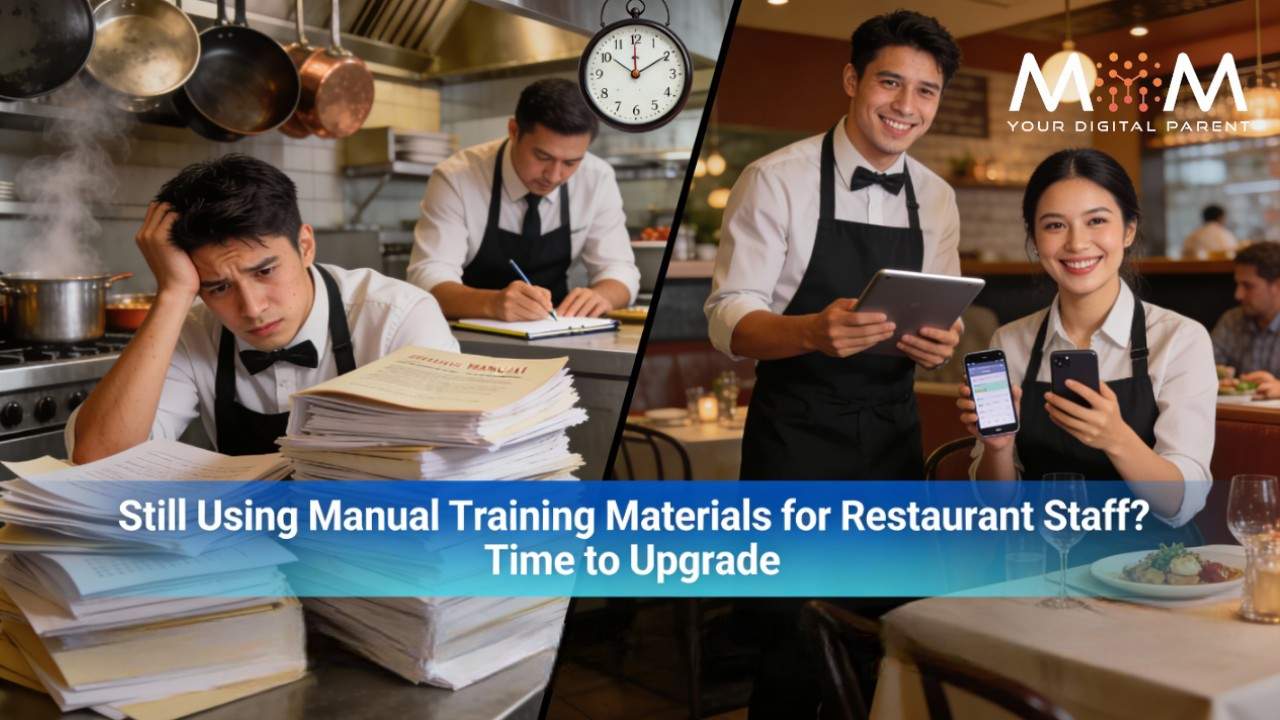
Restaurants thrive on consistency—consistent food quality, service standards, hygiene practices, and customer experience. But behind every successful restaurant is a well-trained team. Unfortunately, many restaurants still rely on manual training materials such as printed manuals, verbal instructions, scattered PDFs, WhatsApp messages, or whiteboard notes to train their staff. While this approach may have worked in the past, it no longer meets the demands of modern restaurant operations.
In today’s fast-paced restaurant environment, manual training methods slow down onboarding, increase errors, and place unnecessary pressure on managers. If your restaurant is still using traditional training materials, it’s time to upgrade to a digital training module built into a modern workforce management system.
The Reality of Manual Training in Restaurants
Manual training methods are common in restaurants because they seem simple and familiar. Managers explain tasks verbally, senior staff train juniors, and printed SOPs are shared during onboarding. However, this system comes with serious limitations.
Verbal instructions are often forgotten, printed manuals get outdated, and training quality varies depending on who is teaching. New employees may miss important steps, leading to service mistakes, food safety risks, and customer dissatisfaction. Over time, these small gaps grow into operational problems that directly affect business performance.
Common Problems Caused by Manual Training Materials
1. Inconsistent Training Across Staff and Shifts
When training is manual, different employees receive different versions of instructions. Morning staff may follow one process, while evening staff follow another. This inconsistency affects service quality and brand reputation, especially in busy restaurants.
2. Repetitive Training Burden on Managers
Managers spend a large portion of their time repeating the same instructions to new hires or correcting mistakes caused by unclear training. This takes their
3. No Central Place for Training Materials
Training documents are often scattered—some printed, some shared digitally, and some stored only in people’s memory. This makes it difficult for employees to revisit information when needed.
4. Difficult to Scale for Multiple Locations
As restaurants expand to multiple branches, manual training becomes nearly impossible to standardize. Each outlet trains staff differently, resulting in uneven service quality across locations.
Why Restaurant Training Needs a Digital Upgrade
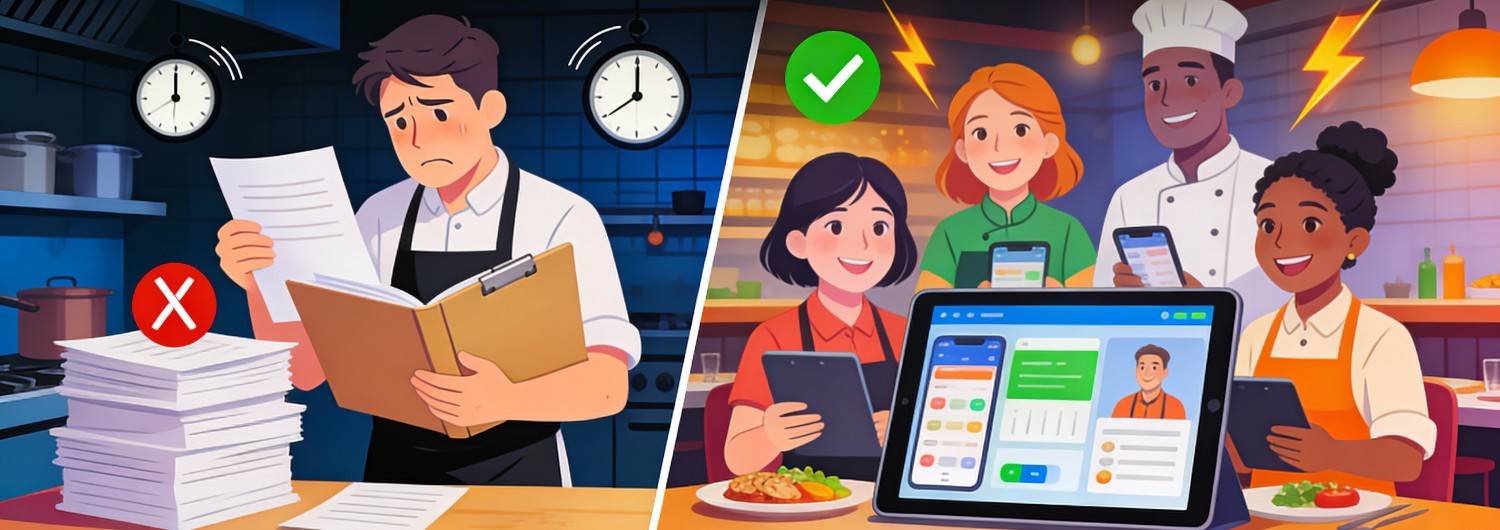
The restaurant industry has evolved, and so has workforce management. With high employee turnover, shift-based work, and customer expectations rising, restaurants need training systems that are structured, accessible, and scalable.
Digital training materials eliminate confusion by providing employees with clear, consistent instructions they can access anytime. Instead of relying on memory or repeated explanations, staff can learn through organized digital content that supports faster learning and better performance.
How Digital Training Materials Simplify Restaurant Staff Training
Centralized Training in One Platform
With digital training, all materials are stored in one place. Employees no longer need to search for information or ask managers repeatedly. Everything they need to know is available inside a single workforce app.
Self-Learning at Any Time
Staff can access training materials anytime—before a shift, during breaks, or whenever clarification is needed. This reduces dependency on supervisors and encourages independent learning.
Consistent Training for Every Employee
Every staff member receives the same training content, ensuring uniform service standards across all shifts and branches. This consistency strengthens brand identity and customer experience.
Reduced Errors and Rework
When employees clearly understand procedures, mistakes decrease. This improves food quality, service speed, hygiene compliance, and overall operational efficiency.
The Role of Workforce Management Software in Training
Training alone is not enough—restaurants need training that works seamlessly with daily operations. That’s where workforce management and HRMS software play a crucial role.
A workforce management system integrates training with:
- Attendance tracking
- Shift scheduling
- Employee performance
- Task management
- Role assignments
This creates a complete ecosystem where training supports real-time workforce operations rather than existing as a separate activity.
How MOM Digital’s Restaurant Training Module Solves Manual Training Challenges
MOM Digital offers a restaurant material training module as part of its workforce management and HRMS software. This module is specifically designed to replace outdated manual training methods with a smart, digital-first approach.
Restaurants can upload all training materials into MOM Digital’s platform, allowing employees to view everything from one app. Whether it’s kitchen procedures, service etiquette, or safety protocols, staff always have access to the right information at the right time.
Why Digital Training Is Essential for Restaurant Growth
As restaurants grow, manual training becomes a bottleneck. Digital training supports scalability by ensuring new locations, new staff, and new processes are implemented smoothly without increasing training workload.
It also improves employee confidence and job satisfaction. When staff clearly understand their responsibilities, they perform better and feel more secure in their roles, reducing turnover.
Signs It’s Time to Upgrade Your Training System
If your restaurant experiences any of the following, digital training is no longer optional:
- Managers repeatedly explaining the same tasks
- Inconsistent service quality across shifts
- Frequent staff mistakes during service
- Training materials scattered across formats
- Difficulty managing training across branches
These issues indicate that manual training materials are limiting your restaurant’s potential.
The Future of Restaurant Training Is Digital
The restaurant industry is moving toward automation, mobility, and smarter workforce management. Digital training materials are becoming a standard, not a luxury. Restaurants that adopt digital training early gain a competitive advantage through better-trained teams, smoother operations, and improved customer satisfaction.
Conclusion: Upgrade Your Restaurant Training with MOM Digital
Still using manual training materials may feel comfortable, but it comes at the cost of efficiency, consistency, and growth. Upgrading to digital training materials is no longer about convenience—it’s about survival and scalability in a competitive restaurant market.
With MOM Digital’s Restaurant Training Module, restaurants can centralize all training materials in one app, empower employees with self-learning, reduce managerial workload, and ensure consistent service across every shift and location. Combined with powerful workforce management and HRMS features, MOM Digital transforms restaurant training into a streamlined, structured, and future-ready process.
If your restaurant is ready to move beyond paperwork and verbal instructions, it’s time to upgrade your training system—with MOM Digital.