
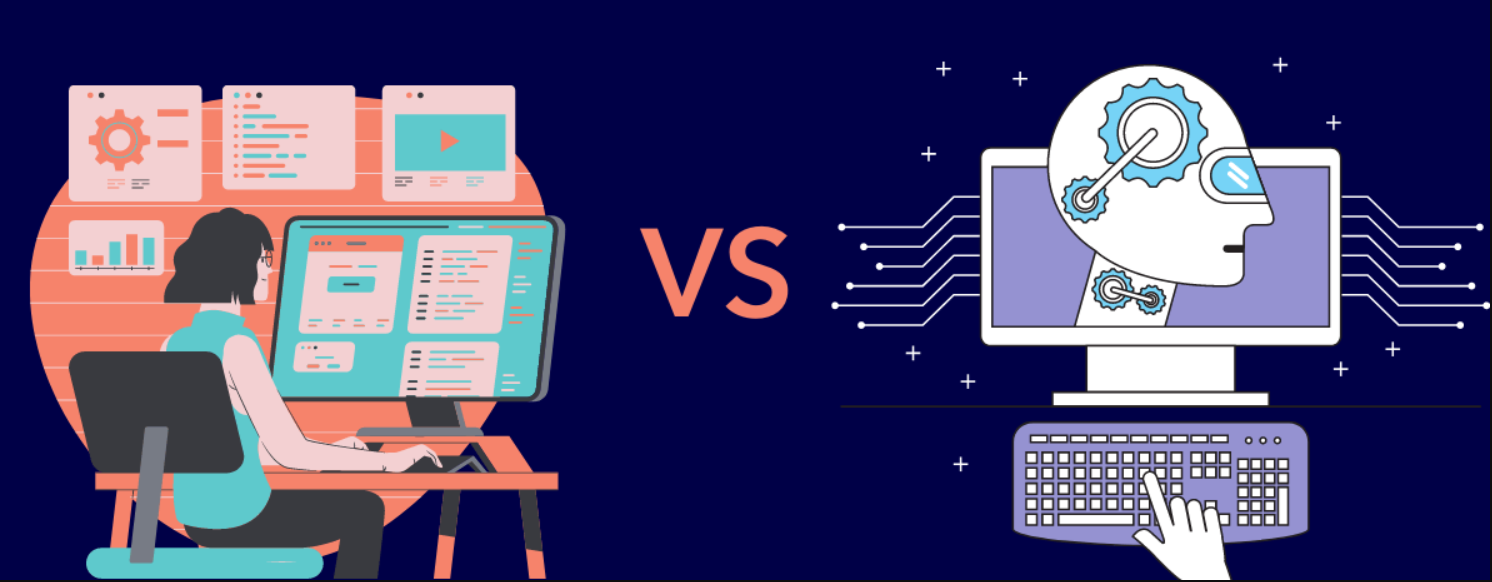
In a fast-evolving business world, controlling workforce operations efficiently is no longer a luxury—it’s a necessity. As teams grow and compliance requirements multiply, HR departments that still rely on manual records, spreadsheets, or outdated systems often struggle to keep pace. The modern alternative? A Human Resource Management System (HRMS) that integrates everything from attendance tracking to payroll automation in one platform.
This guide explores how HRMS outperforms manual HR management in control, accuracy, compliance, and cost-effectiveness—and why businesses that modernize now build a stronger foundation for scale and agility.

1. The Limitation of Manual HR Processes
Manual HR processes traditionally involve physical files, Excel sheets, and email-based communication for core HR functions like attendance tracking, leave management, payroll, and performance reviews. While this method once worked for small teams, it quickly becomes unsustainable as companies expand.
Here’s where manual HR shows its weaknesses:
- Inconsistent data: Different HR executives record information differently, creating multiple data silos and errors.
- Limited workforce insight: Without unified data, tracking patterns like absenteeism or departmental productivity becomes tedious.
- Compliance challenges: Manual documentation increases the risk of non-compliance with labor laws or taxation rules due to human oversight.
- No real-time visibility: Managers can’t instantly view team attendance, leaves, or performance metrics, slowing decision-making.
- Higher administrative workload: HR staff spend hours on repetitive tasks instead of talent strategy or employee engagement.
The result? Less control, slower responses, and higher operational costs disguised as administrative effort.
2. How HRMS Redefines Workforce Control
An HRMS brings everything HR-related—employee data, attendance, leave, performance, payroll, recruitment, and analytics—into one digital ecosystem. This centralization not only streamlines tasks but also empowers HR and operations leaders with real-time visibility and actionable insights.
Key ways HRMS improves control:
- Centralized employee database: Every employee’s data, from joining details to benefits, is stored securely in a single platform accessible with defined role-based permissions.
- Automated workflows: Leave approvals, training requests, and reimbursements follow predefined digital workflows, reducing dependency on manual intervention.
- Data accuracy and consistency: Automation minimizes input errors, ensuring payroll and compliance reports remain reliable.
- Instant access to reports: With dashboards and analytics, HR leaders can identify trends, control overtime, and monitor engagement effortlessly.
- Scalable processes: As your workforce grows, adding new employees or departments doesn’t increase workload exponentially—HRMS supports seamless scalability.
In short, HRMS replaces fragmented HR control with unified visibility and accountability across the organization.
3. Payroll and Attendance: Manual vs Automated Control
Payroll and attendance are often the first areas where manual HR shows cracks. In a paper-based environment, time entries and leave updates are prone to errors. Missed notations or late submissions lead to incorrect payouts and employee dissatisfaction.
Manual HR drawbacks:
- Manual attendance registers increase the risk of manipulation or error.
- Payroll calculations need repeated cross-checking with timesheets and leave records.
- Tax, PF, and compliance deductions depend on manual formulas, often leading to mistakes.
HRMS advantages:
- Automated attendance through biometric or app-based systems ensures accuracy.
- Payroll is auto-calculated based on attendance, shift hours, and allowances.
- The system automatically applies compliance and statutory deductions like EPF, ESI, and TDS based on location and employee type.
With HRMS in place, accuracy becomes built-in, not dependent on cross-verification. That means better payroll control, faster processing, and happier employees.
4. Compliance and Data Security
Manual HR setups typically maintain employee records in spreadsheets or paper files. This increases exposure to data loss, theft, or unauthorized access. Compliance management also becomes reactive rather than proactive.
HRMS strengthens compliance control by:
- Automating statutory updates: The system stays updated with the latest labor laws, ensuring proper deductions and submissions.
- Role-based access control: Sensitive information, such as salaries or appraisals, is accessible only to authorized personnel.
- Digital audit trails: Every update or approval is timestamped, creating a transparent, traceable process history.
- Data backup and security: Cloud-based HRMS platforms come with encryption and regular backups, reducing risks associated with physical or local data storage.
For organizations managing remote teams or cross-border operations, HRMS becomes indispensable for maintaining compliance seamlessly.
5. Employee Self-Service and Empowerment
Manual systems often force HR departments to become gatekeepers of data—employees must email HR for payslips, leave balance, ID proofs, or basic policy queries. This dependency slows down workflows and increases HR load.
A good HRMS changes that with Employee Self-Service (ESS) and Manager Self-Service (MSS) features, empowering both employees and supervisors.
Benefits include:
- Employees can apply for leaves, download payslips, and update personal details independently.
- Managers can approve requests, view attendance, and track team performance from their dashboards.
- HR no longer handles routine requests manually—freeing time for strategic initiatives.
This shift enhances transparency, accountability, and employee satisfaction while strengthening overall operational control.
6. Analytics and Decision-Making Power
Manual HR provides static reports—limited insights that require time to compile. In contrast, HRMS tools turn data into real-time analytics, offering visibility into workforce dynamics at a glance.
With HR analytics dashboards, companies can track:
- Attendance and overtime trends.
- Department-wise attrition and performance ratios.
- Cost per new hire and training ROI.
- Productivity levels across locations or teams.
By identifying these patterns early, organizations can make informed decisions about resource allocation, workload balancing, and retention strategies. HRMS turns HR teams from administrators into data-driven strategists.
7. Cost, Scalability, and ROI
One of the biggest myths about HRMS is that it’s expensive. However, the real cost lies in inefficiencies—hours wasted, errors corrected, and penalties paid due to manual oversights.
Here’s how HRMS delivers ROI:
- Reduced administrative overhead: Automated workflows eliminate repetitive manual tasks.
- Time savings: Faster payroll processing and employee lifecycle management.
- Error reduction: Accurate data entry leads to fewer disputes and rework.
- Remote accessibility: Cloud-based HRMS ensures 24/7 access for distributed teams.
- Supercharged scalability: Adding new roles, branches, or policies takes minutes—not weeks.
In purely financial terms, HRMS often pays for itself within the first year of deployment through efficiency gains alone.
8. Real-Time Workforce Control in Action
Consider this example: A company managing 300+ employees across multiple cities handles attendance through spreadsheets and manual entries. Payroll takes five days each month, and discrepancies lead to frequent employee frustrations.
After implementing HRMS:
- Payroll is completed in hours, not days.
- Attendance integrates directly from biometric systems into payroll.
- Compliance reports are generated automatically for audits.
- Managers gain real-time visibility into team attendance and leave patterns.
That’s workforce control in its truest sense—achieved through automation, transparency, and data reliability.
9. The Changing Role of HR with Automation
When HRMS handles repetitive tasks, HR professionals can focus on strategic goals:
- Enhancing workplace culture and engagement.
- Designing performance-linked growth programs.
- Driving learning and development initiatives.
- Aligning hiring and retention with business goals.
Instead of simply managing data, HR becomes a driver of business transformation—a shift only possible with digital tools replacing manual systems.
10. Why Software Wins: The Final Verdict
When comparing HRMS vs manual HR, the differences are undeniable:
| Aspect | Manual HR | HRMS |
| Accuracy | Prone to human error | Automated and consistent |
| Transparency | Limited visibility | Role-based dashboards and history |
| Compliance | High risk due to manual monitoring | Real-time statutory updates |
| Employee Engagement | Request-dependent and slow | Empowered with self-service tools |
| Scalability | Challenging as workforce increases | Easily configurable and expandable |
HRMS turns control into insight, and insight into action—and that’s where businesses gain a real competitive edge.
Conclusion: MOM Digital – Your HRMS Acceleration Partner
Transitioning from manual HR processes to a robust HRMS isn’t just a tech shift—it’s a strategic leap toward control, compliance, and clarity. MOM Digital helps organizations achieve exactly that with intuitive HRMS solutions built to simplify travel requests, payroll, attendance, and employee management under one unified dashboard.
With MOM Digital’s customized HRMS implementation, companies experience:
- Faster approvals and better cross-department visibility.
- Automated HR workflows aligned with company policies.
- Scalable solutions that grow with your workforce.
Take the smarter route to workforce control.
Explore MOM Digital’s HRMS solutions and empower your HR team to focus on people—not paperwork.
 Save 10+ hours/week with AI automation -Automate payroll, leave management & compliance