
In today’s fast-paced business environment, managing employee performance is no longer just about annual reviews and basic evaluations. Organizations need real-time insights, measurable outcomes, and actionable data to ensure their workforce is performing at its peak. This is where HRMS analytics steps in as a game-changer. With the right tools, performance management becomes simpler, more effective, and directly tied to business growth.
At MOM Digital, we understand that HR teams require more than traditional methods to manage talent. Our HRMS Analytics transforms raw data into meaningful insights, helping leaders make informed decisions, enhance productivity, and foster employee growth.
The Challenges of Traditional Performance Management
Traditional performance management often involves manual processes, spreadsheets, and periodic reviews. While these methods may have worked in the past, they present several challenges in modern workplaces:
- Delayed Feedback – Annual or semi-annual reviews mean employees wait months before receiving feedback, delaying improvement.
- Data Silos – Information scattered across multiple systems or departments makes it difficult to get a holistic view of performance.
- Subjectivity—Manual assessments often rely on manager opinions rather than data-driven insights, which can lead to bias.
- Lack of Real-Time Visibility – Managers struggle to track employee performance in real time, making proactive interventions nearly impossible.
- Difficulty in Aligning Goals – Without clear visibility, aligning individual goals with organizational objectives becomes challenging.
These challenges highlight the need for a robust, data-driven approach to performance management.
How HRMS Analytics Simplifies Performance Management
HRMS analytics integrates employee data into a centralized platform, providing actionable insights that simplify performance management in multiple ways:
1. Real-Time Performance Tracking
With HRMS analytics, managers can monitor employee performance continuously rather than waiting for scheduled review periods. Metrics such as task completion, project timelines, attendance, and KPIs are tracked automatically. This allows HR teams to identify trends, recognize high performers, and address issues proactively.
2. Data-Driven Insights
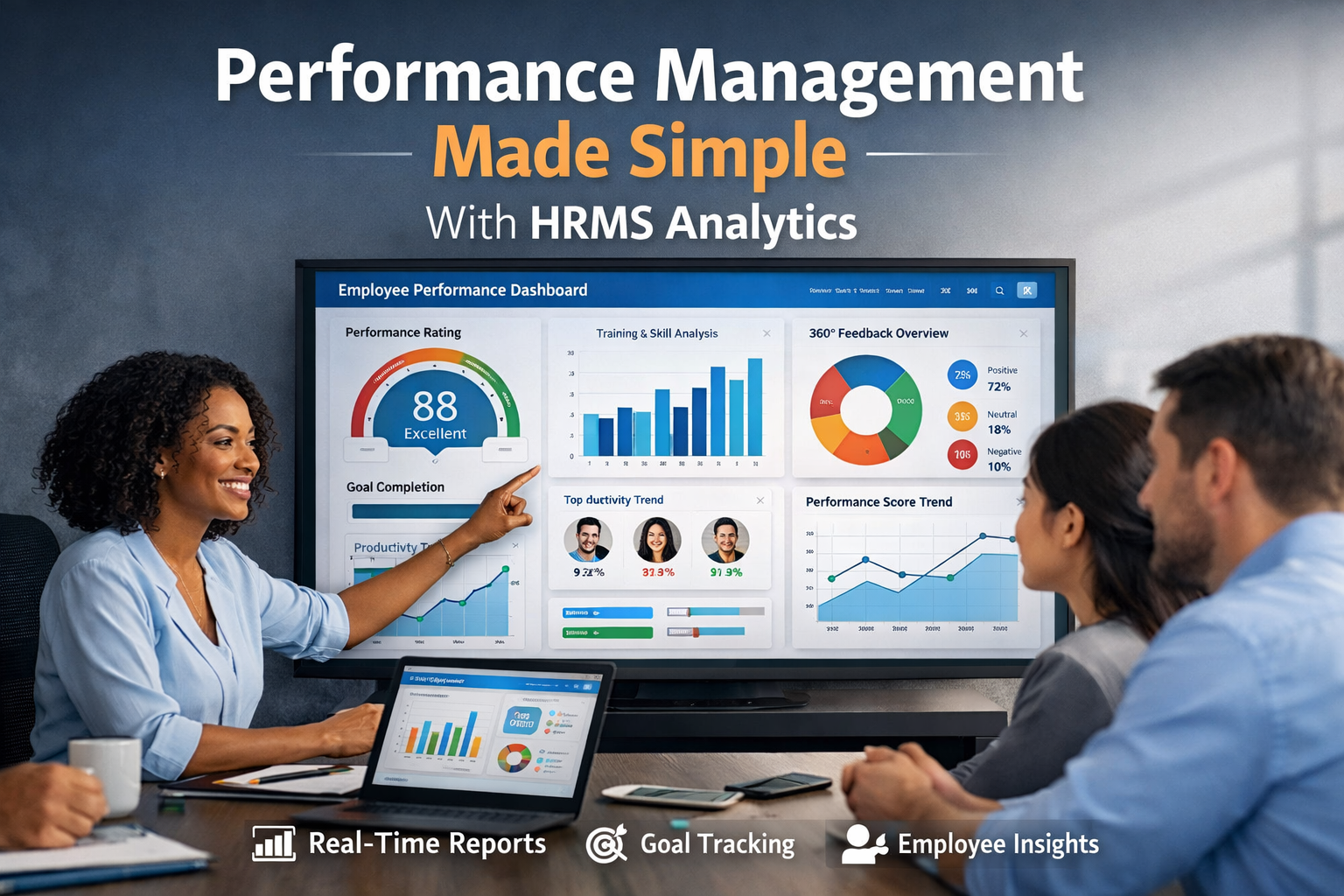
Analytics transforms raw HR data into visual dashboards and reports. Managers can see performance trends, skill gaps, and productivity patterns at a glance. This data-driven approach minimizes subjectivity and ensures evaluations are based on measurable outcomes rather than opinions.
3. Goal Alignment
HRMS analytics helps in setting clear, measurable objectives for employees that align with organizational goals. By tracking progress in real time, employees understand their contributions to the company’s success, fostering accountability and motivation.
4. Personalized Employee Development
By analyzing performance trends, HRMS analytics can identify employees’ strengths and areas for improvement. This enables managers to create personalized development plans, recommend training programs, or assign mentorship opportunities to help employees reach their potential.
5. Simplified Reporting
Instead of spending hours compiling data from spreadsheets, HR teams can generate reports instantly. From departmental performance to individual assessments, HRMS analytics provides detailed insights in a fraction of the time, enabling faster decision-making.
6. Predictive Analytics for Better Decisions
Advanced HRMS platforms like MOM Digital use predictive analytics to forecast future performance trends. This helps organizations plan promotions, succession, and workforce allocation with confidence.

Key Features of MOM Digital HRMS Analytics for Performance Management
The MOM Digital HRMS Analytics platform is designed to simplify performance management for modern organizations. Some of its key features include:
- Centralized Dashboard – Access all performance metrics in one place, from employee KPIs to departmental productivity.
- Automated Evaluations – Track attendance, task completion, project milestones, and appraisals automatically.
- Real-Time Alerts – Receive notifications for performance deviations, goal completions, or deadlines.
- Customizable Reports – Generate detailed reports tailored to your organization’s needs.
- Employee Self-Service Portal – Allow employees to track their own progress, goals, and achievements.
- Goal Management & Alignment – Set measurable objectives and track them against company goals.
- Training & Development Recommendations – Identify skill gaps and recommend learning paths for employees.
With these features, HR teams can focus less on administrative work and more on strategic talent management.
Benefits of Using HRMS Analytics for Performance Management
Implementing HRMS analytics for performance management offers multiple benefits for organizations:
1. Increased Productivity
Continuous tracking and real-time feedback help employees stay focused and motivated, leading to higher productivity levels.
2. Better Employee Engagement
Transparent performance metrics and regular feedback improve engagement, as employees understand how their contributions impact organizational goals.
3. Reduced Bias
Data-driven evaluations minimize subjectivity, ensuring fair and consistent performance assessments.
4. Enhanced Decision-Making
With predictive insights, managers can make informed decisions regarding promotions, role changes, and workforce planning.
5. Time and Cost Savings
Automated tracking, reporting, and analytics reduce administrative workload, freeing HR teams to focus on strategic initiatives.
Getting Started With MOM Digital HRMS Analytics
Adopting HRMS analytics doesn’t have to be complicated. Here’s how organizations can get started:
- Centralize Employee Data – Consolidate attendance, task, payroll, and appraisal data into the HRMS platform.
- Define Metrics & KPIs – Set measurable performance indicators aligned with business goals.
- Leverage Dashboards & Reports – Monitor real-time performance and generate insights instantly.
- Provide Feedback & Development – Use insights to guide employee growth and training initiatives.
- Continuously Optimize – Refine goals, track trends, and make data-driven decisions regularly.
With MOM Digital, the entire process becomes seamless, intuitive, and efficient.
Conclusion
Performance management no longer needs to be a cumbersome, manual process. By leveraging HRMS analytics, organizations can transform raw HR data into actionable insights, track employee performance in real time, and align individual goals with overall business objectives.
The MOM Digital HRMS Analytics platform simplifies performance management, empowers HR teams with actionable insights, and ensures employees receive timely feedback to grow and succeed. With automation, real-time visibility, and predictive analytics, managing workforce performance has never been easier.
Start leveraging HRMS analytics today and turn performance management into a strategic advantage for your business.