
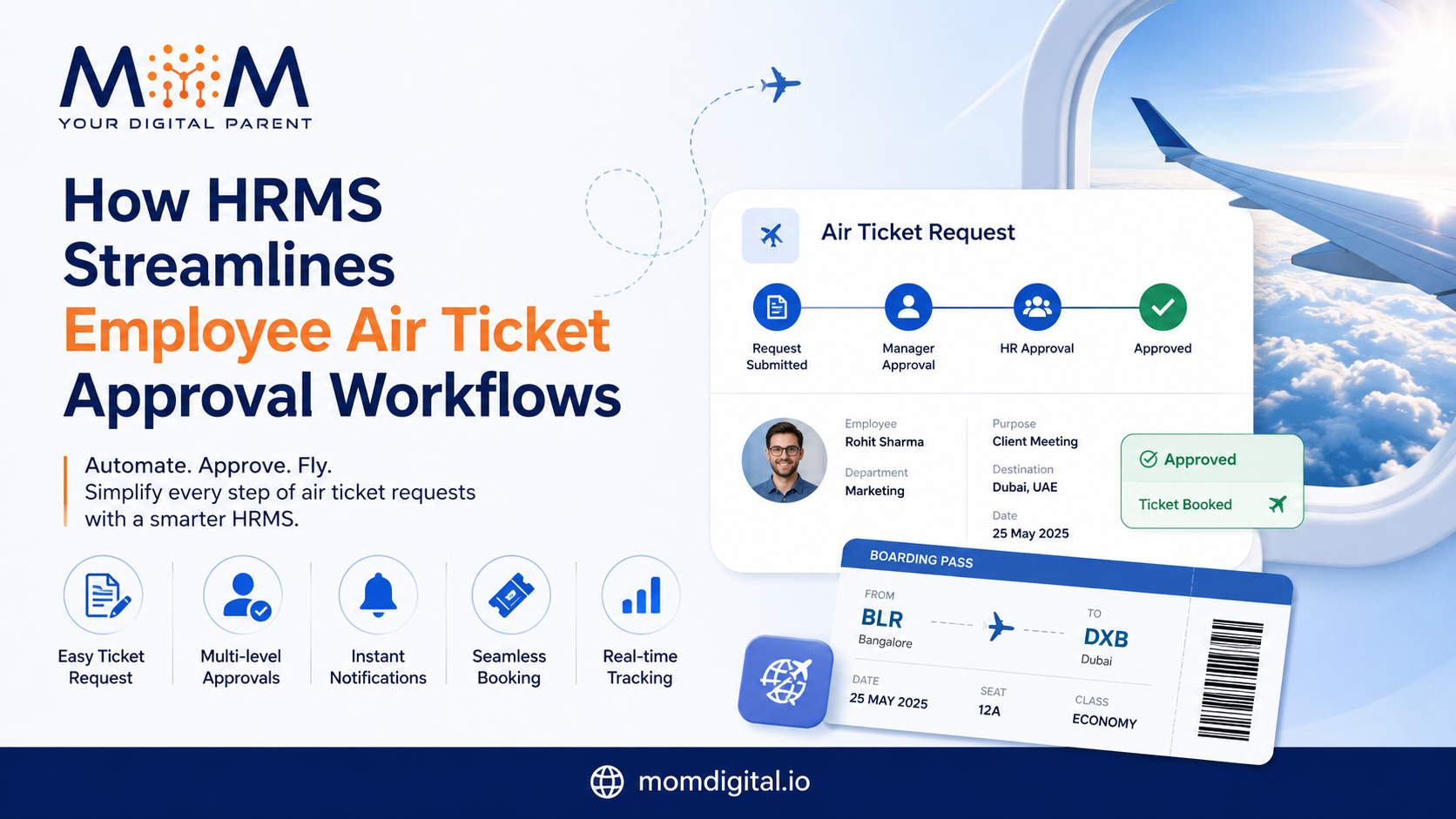
In many organizations, especially those with multiple branches, client travel requirements, or international operations, employee travel management is an important part of HR and administrative processes. One of the most common challenges businesses face is managing employee air ticket requests and approvals efficiently.
Traditional air ticket approval workflows often involve emails, spreadsheets, manual forms, and multiple follow-ups. These outdated methods can create delays, confusion, approval bottlenecks, and poor visibility into travel requests.
As businesses continue to modernize operations, organizations are now adopting HRMS solutions to automate and streamline employee air ticket approval workflows. A modern HRMS not only simplifies travel request management but also improves transparency, efficiency, and employee experience.
The Challenges of Manual Air Ticket Approval Processes
Many companies still handle employee travel approvals manually. Employees submit requests through email or paper forms, managers approve them through separate communication channels, and HR or administration teams coordinate the booking process.
This approach creates several operational challenges.
Delayed Approvals
Manual approval chains often slow down the process. Managers may miss emails or approvals may remain pending for days, especially when multiple departments are involved.
This delay can affect business travel schedules and create frustration for employees.
Lack of Workflow Visibility
Employees often do not know the status of their requests. HR teams also struggle to track which approvals are pending, completed, or rejected.
Without centralized tracking, communication gaps become common.
Increased Administrative Work
HR and administration teams spend significant time managing travel requests manually, checking approvals, and coordinating with employees.
This repetitive work reduces operational efficiency.
Errors and Miscommunication
Manual processes increase the chances of mistakes such as incorrect travel dates, duplicate requests, or missed approvals.
Miscommunication can lead to booking delays and unnecessary expenses.
Difficulty Managing Travel Policies
Organizations often have different travel policies based on employee roles, departments, or project requirements.
Managing these policies manually can become complicated and inconsistent.
Why Businesses Need Automated Air Ticket Approval Workflows
As organizations grow, travel management becomes more complex. Businesses need systems that can automate approvals, improve visibility, and reduce administrative workload.
An HRMS with air ticket approval workflow capabilities helps organizations manage employee travel requests through a centralized and automated process.
This ensures faster approvals, better coordination, and more organized workforce travel management.
How HRMS Streamlines Air Ticket Approval Workflows
1. Centralized Request Submission
Employees can submit air ticket requests directly through the HRMS portal instead of sending emails or paperwork.
They can enter:
- Travel dates
- Destination details
- Purpose of travel
- Preferred schedules
All requests are stored in one centralized system, making them easy to track and manage.
2. Automated Approval Routing
One of the biggest advantages of HRMS is automated workflow routing.
The system automatically sends travel requests to the appropriate managers or departments based on predefined approval structures.
This eliminates manual forwarding and speeds up the approval process.
3. Real-Time Request Tracking
Employees and HR teams can track the status of travel requests in real time.
They can instantly view whether the request is:
- Pending approval
- Approved
- Rejected
- Under review
This transparency reduces confusion and improves communication.
4. Faster Approval Process
Automated notifications and reminders help managers respond quickly to travel requests.
Approvals can be completed directly within the system from desktop or mobile devices, reducing delays significantly.
Faster approvals ensure smoother travel coordination.
5. Integration with Employee Data
Since HRMS already stores employee information, the system can automatically fetch relevant details such as:
- Employee ID
- Department
- Designation
- Reporting manager
This reduces manual data entry and improves accuracy.
6. Policy-Based Approval Workflows
Modern HRMS platforms allow organizations to configure travel policies based on business rules.
For example:
- Senior management may have different travel entitlements
- International travel may require additional approvals
- Budget limits can be applied automatically
The system ensures that all requests follow company policies consistently.
7. Reduced Administrative Workload
Automating travel approvals significantly reduces manual coordination between employees, managers, HR, and administration teams.
HR professionals can spend less time handling repetitive travel-related tasks and focus more on strategic activities.
8. Better Record Management
HRMS maintains a complete digital history of all travel requests and approvals.
Organizations can easily access records for:
- Audit purposes
- Expense tracking
- Travel analysis
- Compliance reporting
Digital record management improves operational transparency.
Benefits for Employees
Employees also benefit greatly from automated travel workflows.
They can:
- Submit requests easily
- Receive faster approvals
- Track request status instantly
- Avoid repeated follow-ups
This creates a smoother and more professional employee experience.
Supporting Remote and Global Workforces
For organizations with remote teams or international operations, managing travel manually becomes even more difficult.
Cloud-based HRMS systems allow employees and managers to access travel workflows from anywhere.
This flexibility ensures uninterrupted travel management across locations and time zones.
Improving Operational Efficiency
Efficient travel approval workflows contribute to overall organizational productivity.
When travel requests are handled quickly and accurately:
- Business operations continue smoothly
- Employees can travel on schedule
- Managers gain better visibility
- Administrative delays are minimized
Automation helps businesses operate more efficiently and professionally.
Future of HRMS Travel Management
As HR technology continues to evolve, travel workflows are becoming smarter and more integrated.
Future-ready HRMS platforms may include:
- AI-powered approval recommendations
- Automated travel budgeting
- Integrated expense management
- Predictive travel analytics
These innovations will further improve efficiency and decision-making.
Why Integrated HRMS Matters
Managing travel approvals through separate systems or manual methods creates unnecessary complexity.
An integrated HRMS connects travel workflows with attendance, payroll, employee records, and organizational structures in one unified platform.
This integration improves accuracy, simplifies management, and enhances overall workforce operations.
Conclusion
Employee air ticket approvals are an essential part of workforce management for many organizations. However, manual approval systems often create delays, confusion, and administrative burden.
Modern HRMS solutions simplify and automate the entire workflow—from request submission and approval routing to tracking and record management.
By streamlining travel approval processes, businesses can improve efficiency, reduce errors, and enhance employee experience.
With intelligent workflow automation and integrated workforce management features, MOM Digital provides a powerful HRMS solution that helps organizations simplify employee air ticket approvals and build smarter, more efficient HR operations for the future.