
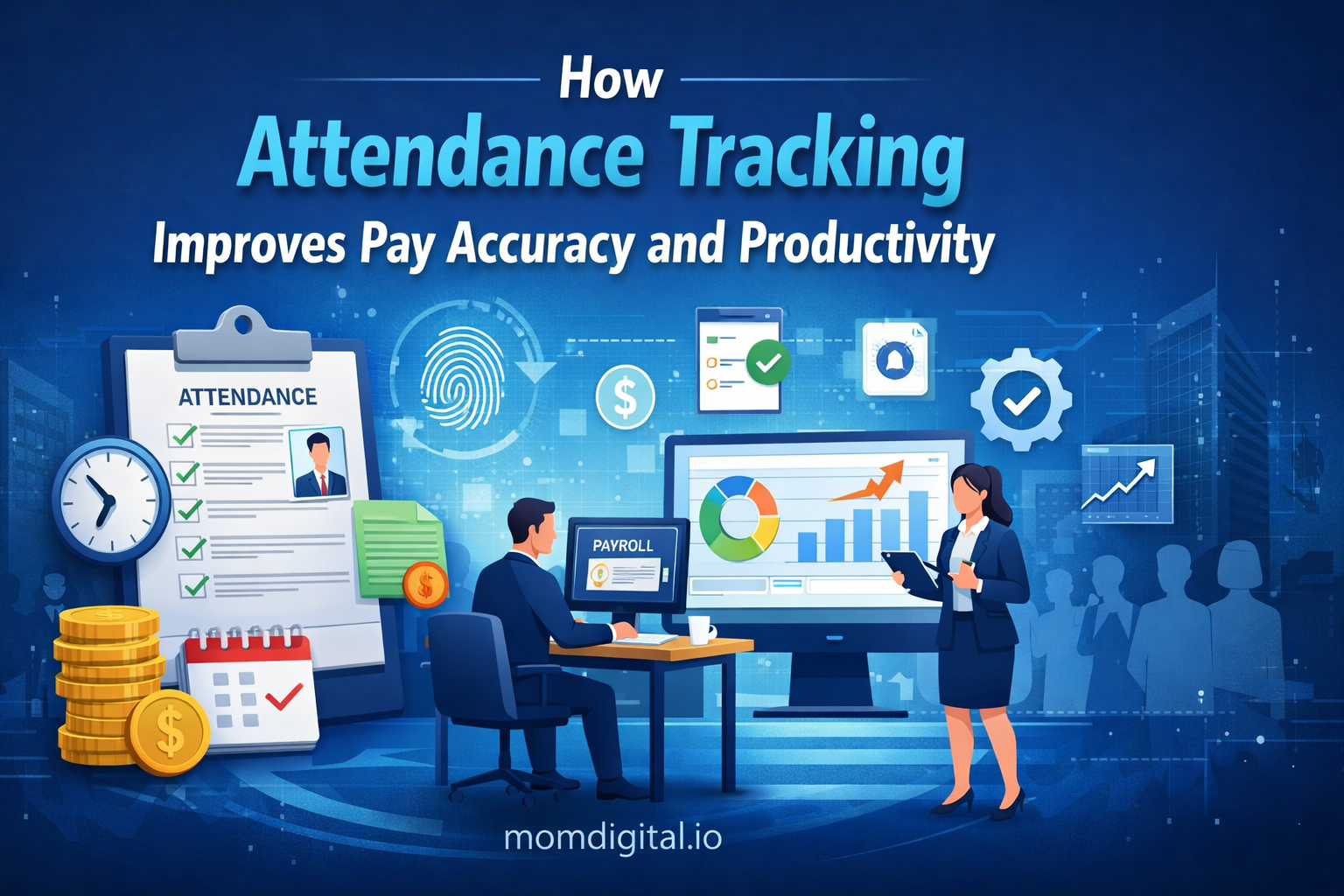
In any organization, accurate attendance tracking is the foundation of efficient workforce management. From calculating salaries to monitoring employee productivity, attendance data plays a critical role in day-to-day operations.
However, many businesses still rely on manual systems such as spreadsheets, paper registers, or outdated tools to track attendance. These methods often lead to errors, delays, and inefficiencies that directly impact payroll accuracy and overall productivity.
Modern attendance tracking systems, integrated within HRMS platforms, solve these challenges by providing real-time data, automation, and better visibility. Let’s explore how attendance tracking improves both pay accuracy and workplace productivity.
The Importance of Accurate Attendance Tracking
Attendance tracking is more than just recording when employees clock in and out. It directly affects:
- Salary calculations
- Overtime payments
- Leave management
- Workforce planning
- Compliance with labor regulations
When attendance data is inaccurate, it creates a ripple effect across multiple HR functions, especially payroll.
Accurate attendance tracking ensures that employees are compensated fairly while maintaining operational efficiency.
Common Challenges with Manual Attendance Systems
Organizations that use manual attendance methods often face several issues:
- Incorrect time entries
- Buddy punching or time fraud
- Delayed data updates
- Difficulty managing shifts and overtime
- Errors in payroll calculations
These problems not only affect employee trust but also increase administrative workload for HR teams.
Without a reliable attendance system, maintaining accuracy becomes a constant challenge.
How Attendance Tracking Improves Pay Accuracy
1. Automated Time Recording
Modern attendance systems use technologies such as face scanning, mobile check-ins, or web-based logins to record employee attendance automatically.
This eliminates manual data entry and reduces the risk of human error. Employees’ working hours are captured accurately, ensuring correct salary calculations.
2. Seamless Integration with Payroll
One of the biggest advantages of digital attendance tracking is its integration with payroll systems.
Attendance data such as:
- Working hours
- Overtime
- Late entries
- Leave records
is automatically synced with payroll calculations.
This ensures that salaries are processed accurately without the need for manual adjustments.
3. Accurate Overtime and Leave Calculations
Manual systems often struggle to track overtime and leave balances correctly. Miscalculations can lead to underpayment or overpayment.
Automated attendance tracking systems calculate:
- Overtime hours precisely
- Leave deductions accurately
- Holiday and shift allowances correctly
This level of accuracy ensures fair compensation and reduces payroll disputes.
4. Reduced Payroll Errors
When attendance data is automated and integrated, the chances of payroll errors decrease significantly.
Fewer errors mean:
- Less time spent on corrections
- Improved employee trust
- Better compliance with labor laws
Accurate payroll builds confidence among employees and strengthens organizational credibility.
How Attendance Tracking Boosts Productivity
1. Real-Time Workforce Visibility
Modern attendance systems provide real-time insights into employee availability.
Managers can quickly see:
- Who is present or absent
- Shift schedules
- Ongoing work hours
This visibility helps in better task allocation and ensures that operations run smoothly.
2. Improved Accountability
When employees know that their attendance is tracked accurately, accountability increases.
Automated systems reduce practices like time manipulation or buddy punching. This creates a more disciplined work environment where employees adhere to schedules.
Increased accountability leads to higher productivity across teams.
3. Efficient Shift and Workforce Management
For organizations with multiple shifts or locations, managing schedules manually can be complex.
Attendance tracking systems simplify this by:
- Automating shift assignments
- Monitoring shift changes
- Managing overtime efficiently
Managers can optimize workforce allocation based on real-time data, ensuring that resources are used effectively.
4. Faster Decision-Making
Access to accurate attendance data allows managers to make quick decisions regarding staffing and operations.
For example:
- Identifying understaffed departments
- Managing peak workload periods
- Adjusting schedules to meet business demands
Data-driven decisions help maintain productivity and avoid disruptions.
5. Reduced Administrative Work
Manual attendance tracking requires HR teams to spend hours verifying records, correcting errors, and processing data.
Automated systems eliminate these repetitive tasks, allowing HR professionals to focus on strategic initiatives.
This not only improves HR efficiency but also contributes to overall organizational productivity.
Supporting Remote Work Models
With the rise of remote and hybrid work environments, attendance tracking has become more complex.
Modern systems support remote workforce management by offering:
- Mobile attendance tracking
- Location-based check-ins
- Online work hour monitoring
These features ensure that productivity is maintained regardless of where employees are working.
Organizations can manage distributed teams effectively without compromising on accuracy.
Enhancing Employee Experience
Accurate attendance tracking also improves employee satisfaction.
Employees can:
- View their attendance records
- Track working hours
- Verify overtime calculations
Transparency reduces confusion and builds trust between employees and management.
When employees feel that their time and effort are accurately recorded, their motivation and engagement increase.
Ensuring Compliance and Record Keeping
Labor laws often require organizations to maintain accurate attendance records.
Automated systems help businesses:
- Store attendance data securely
- Generate compliance reports
- Track working hours as per regulations
This reduces the risk of penalties and ensures smooth audits.
Long-Term Benefits of Attendance Tracking Systems
Implementing a modern attendance tracking system offers long-term advantages, including:
- Improved payroll accuracy
- Higher workforce productivity
- Better employee accountability
- Reduced operational costs
- Enhanced decision-making
These benefits contribute to overall business efficiency and growth.
Conclusion
Attendance tracking is a critical component of effective workforce management. Inaccurate or manual systems can lead to payroll errors, reduced productivity, and increased administrative workload.
Modern attendance tracking solutions provide automation, real-time insights, and seamless integration with payroll systems. This ensures accurate salary processing while improving workforce efficiency.
By adopting advanced attendance tracking as part of a comprehensive HRMS, organizations can create a more transparent, productive, and well-managed work environment.
With powerful attendance tracking features designed to improve accuracy and streamline operations, MOM Digital helps businesses enhance payroll efficiency, boost productivity, and manage their workforce with confidence in today’s digital workplace.