
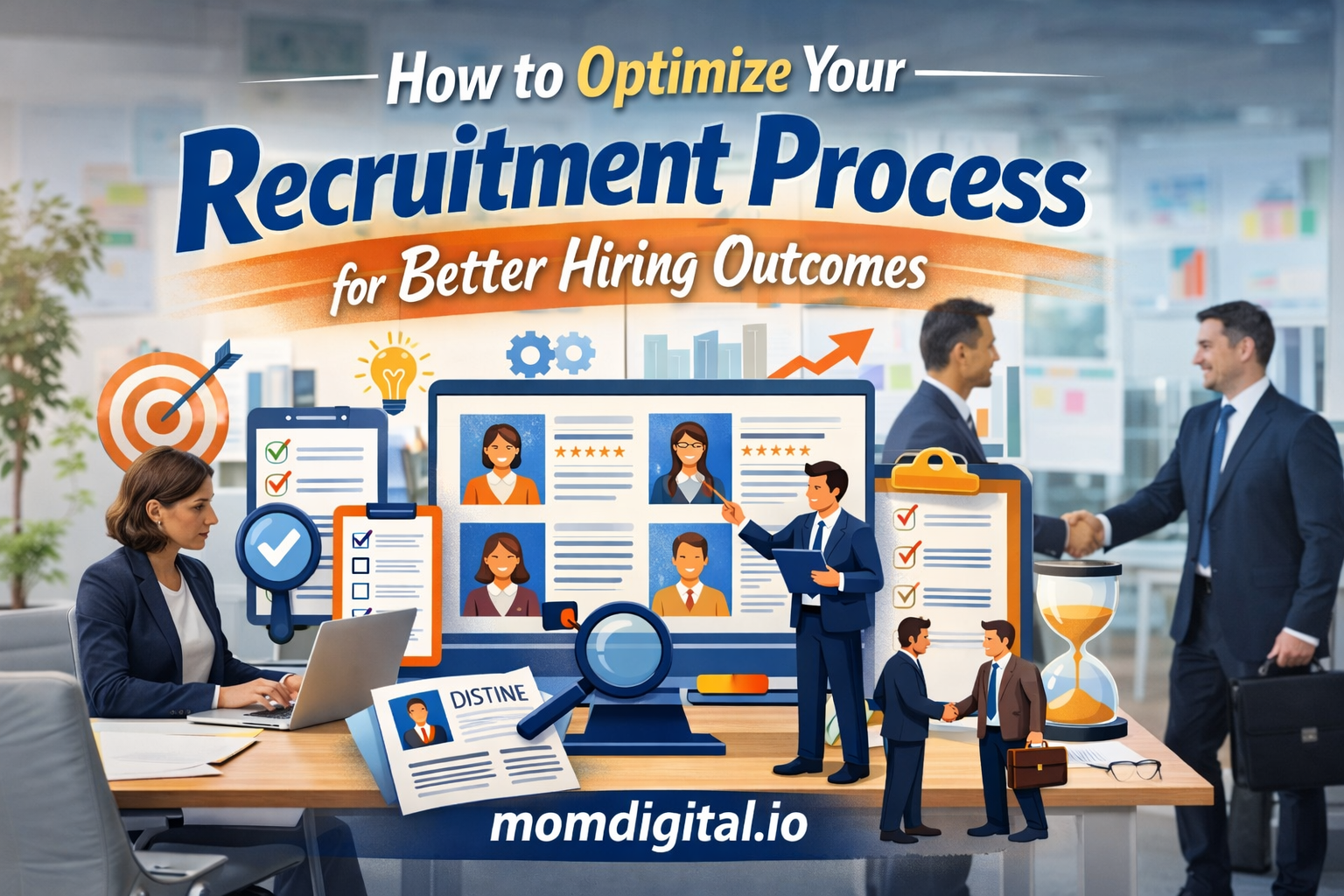
Hiring the right talent is one of the most important decisions any organization makes. A strong recruitment process doesn’t just fill vacancies—it builds high-performing teams, reduces turnover, and supports long-term business growth.
However, many companies still struggle with delayed hiring, poor candidate tracking, unclear job descriptions, and disconnected systems.
To achieve better hiring outcomes, organizations must modernize and optimize their recruitment strategy. With structured workflows, internal and external hiring management, AI-powered tools, and real-time tracking, recruitment becomes faster, smarter, and more effective.
Let’s explore how you can optimize your recruitment process step by step.
1. Start with Clear Workforce Planning
Recruitment optimization begins before posting a job. Organizations should first:
- Identify skill gaps
- Forecast future workforce needs
- Define role expectations clearly
- Set measurable hiring goals
Without proper planning, hiring becomes reactive rather than strategic. Workforce planning ensures every recruitment decision aligns with business objectives.
When hiring is aligned with long-term goals, outcomes improve significantly.
2. Leverage Internal Hiring Opportunities
Many organizations overlook one of their most valuable talent pools—their existing employees.
Internal hiring offers several benefits:
- Reduced hiring time
- Lower recruitment costs
- Higher employee morale
- Better cultural fit
- Faster onboarding
By allowing job listings to be visible internally, companies give employees opportunities for career growth. This improves retention and motivates teams.
An optimized recruitment system should allow HR teams to manage internal job postings separately while tracking applications efficiently.
When employees see growth opportunities within the organization, engagement increases—and so does overall performance.
3. Expand Reach with External Hiring
While internal hiring is valuable, external recruitment brings fresh perspectives and new skills into the organization.
To optimize external hiring:
- Publish job listings across multiple platforms
- Maintain a centralized candidate database
- Standardize interview workflows
- Track candidate progress clearly
A structured recruitment system should allow HR teams to manage both internal and external hiring from one platform. This eliminates confusion and ensures transparency throughout the process.
Balancing internal promotions with external talent acquisition creates a stronger, more dynamic workforce.
4. Use AI-Powered Job Descriptions
One common reason for poor hiring outcomes is unclear or poorly written job descriptions. Vague responsibilities and unrealistic expectations often attract the wrong candidates.
AI-powered job description tools help by:
- Generating structured and professional job roles
- Suggesting skill-based requirements
- Aligning job descriptions with industry standards
- Reducing bias in language
Automation ensures consistency across all job postings. It also saves HR teams valuable time when creating multiple listings.
Clear, well-written job descriptions attract qualified candidates, reduce irrelevant applications, and improve the overall quality of hires.
5. Track Job Application Status in Real Time
A disorganized hiring pipeline leads to communication gaps, delayed decisions, and candidate drop-offs.
To optimize recruitment, organizations need full visibility into:
- Application received
- Shortlisting stage
- Interview rounds
- Offer status
- Rejection or selection updates
A centralized dashboard that tracks job application status ensures that no candidate is overlooked. Recruiters can quickly identify bottlenecks and speed up decision-making.
Real-time tracking improves both internal coordination and candidate experience—two critical factors for successful hiring outcomes.
6. Create Transparent Job Listings
When job lists are categorized as internal or external, it creates clarity for both employees and applicants.
A structured job listing system allows
- Employees to explore internal career opportunities
- HR teams to control job visibility
- Candidates to easily apply for relevant roles
- Leadership to monitor open positions
Transparency reduces confusion and ensures that every vacancy is properly managed.
An optimized recruitment process keeps all listings organized, searchable, and easy to manage.
7. Standardize the Interview and Evaluation Process
Recruitment optimization isn’t just about attracting candidates—it’s about selecting the right one.
Standardized evaluation methods help by:
- Creating consistent interview formats
- Defining clear assessment criteria
- Reducing bias
- Improving hiring accuracy
When hiring decisions are based on structured data rather than assumptions, organizations achieve better long-term results.
8. Improve Candidate Experience
Candidates today evaluate companies just as much as companies evaluate them. A complicated or delayed hiring process can damage employer branding.
To enhance candidate experience:
- Provide timely status updates
- Simplify the application process
- Communicate clearly at each stage
- Offer structured onboarding
When candidates feel respected and informed, even unsuccessful applicants leave with a positive impression.
A strong candidate experience strengthens your organization’s reputation in the job market.
9. Use Data to Improve Hiring Decisions
Recruitment should be driven by measurable insights, not guesswork.
By analyzing recruitment data, organizations can identify:
- Time-to-hire metrics
- Source of successful candidates
- Drop-off stages in the pipeline
- Interview-to-offer ratios
Data helps refine strategies, reduce inefficiencies, and continuously improve outcomes.
Optimized recruitment is an ongoing process—not a one-time setup.
10. Integrate Recruitment with the Larger HR Ecosystem
The recruitment process should not operate in isolation. Once a candidate is hired, their information should seamlessly transfer to onboarding, payroll, and attendance systems.
Integration ensures:
- Reduced data duplication
- Faster onboarding
- Improved record accuracy
- Better workforce visibility
A connected HR ecosystem enhances efficiency and eliminates administrative delays.
Conclusion
Optimizing your recruitment process is essential for building high-performing teams and achieving better hiring outcomes. By combining internal hiring opportunities, structured external recruitment, AI-generated job descriptions, transparent job listings, and real-time application tracking, organizations can transform how they attract and select talent.
A modern HRMS recruitment module brings all these capabilities together into one centralized platform—making hiring smarter, faster, and more strategic.
With advanced recruitment tools designed to manage internal and external hiring, automate job descriptions, and track application status efficiently, MOM Digital empowers organizations to optimize their recruitment process and achieve stronger hiring outcomes with confidence.