Modern HR teams are no longer limited to administrative responsibilities. Today, they play a strategic role in driving productivity, managing talent, and supporting business growth. However, managing a workforce efficiently requires more than traditional tools and manual processes.
To meet the demands of a fast-paced and evolving workplace, organizations must adopt smart workforce solutions that improve efficiency, enhance employee experience, and provide real-time insights.
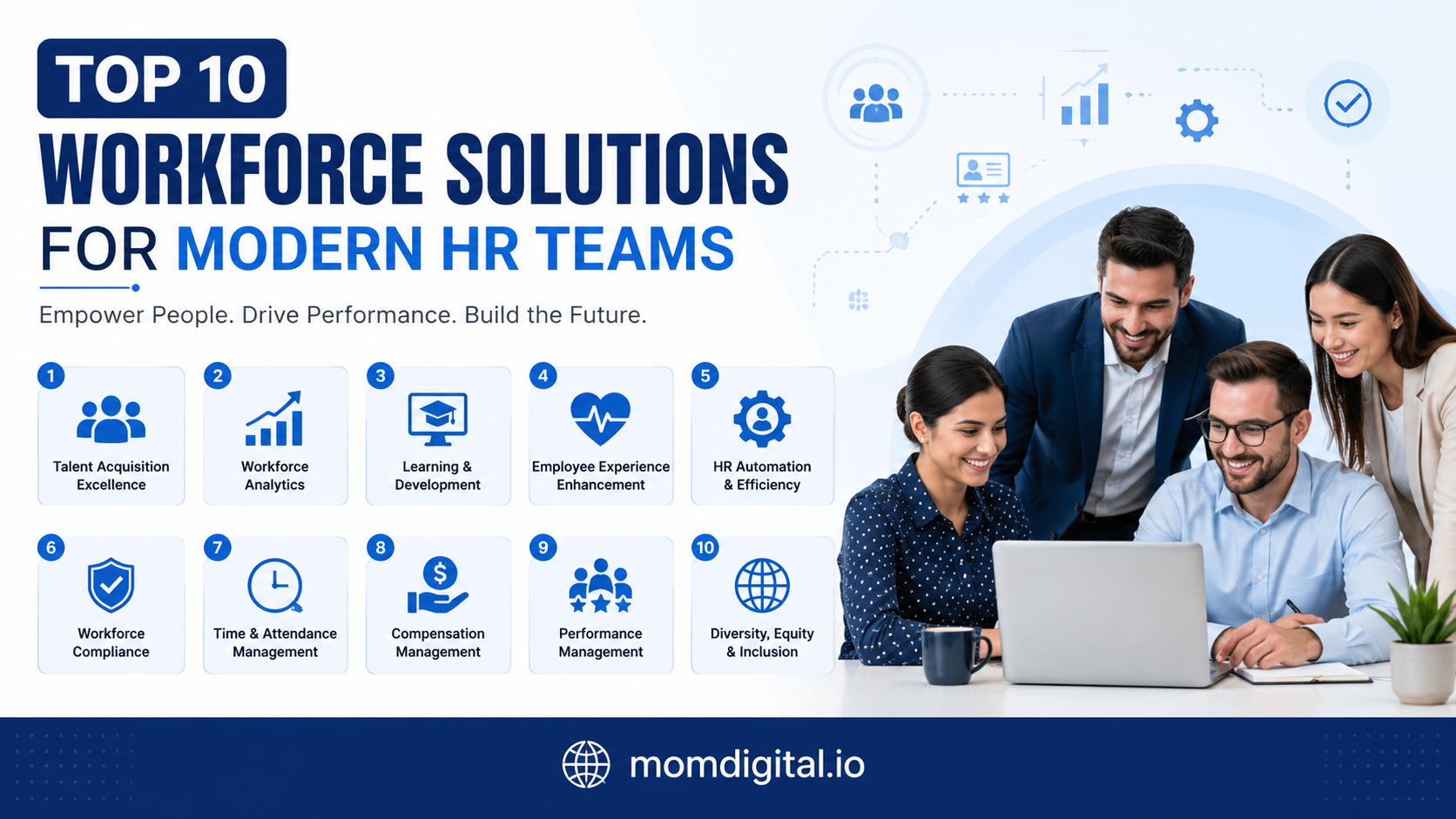
In this guide, we explore the top 10 workforce solutions that modern HR teams need to succeed.
1. Human Resource Management System (HRMS)
An HRMS is the foundation of modern workforce management. It integrates core HR functions such as payroll, attendance, recruitment, and employee data management into a single platform.
By centralizing all HR processes, an HRMS eliminates data silos and improves operational efficiency. HR teams can manage employee information, track performance, and automate routine tasks from one system.
For organizations looking to scale, HRMS is not optional—it’s essential.
2. Payroll Automation Solutions
Payroll is one of the most critical HR functions, and errors can lead to employee dissatisfaction and compliance issues.
Modern payroll solutions automate salary calculations, tax deductions, and compliance reporting. Integration with attendance and leave systems ensures accurate and timely payroll processing.
Automation reduces manual effort and improves accuracy, allowing HR teams to focus on strategic activities.
3. Attendance and Time Tracking Systems
Accurate attendance tracking is crucial for workforce management. Modern systems provide real-time tracking using face check-in devices, mobile apps, or web-based platforms.
These solutions help organizations monitor working hours, manage shifts, and calculate overtime efficiently.
With reliable attendance data, businesses can improve productivity and ensure fair compensation.
4. Recruitment Management Systems
Hiring the right talent is key to organizational success. Recruitment management systems streamline the hiring process by managing job postings, tracking candidate applications, and organizing interview workflows.
Features such as AI-powered job descriptions and application tracking improve hiring efficiency and reduce time-to-hire.
A structured recruitment process ensures that organizations can attract and retain top talent.
5. Employee Self-Service Portals
Employee self-service (ESS) portals empower employees to manage their own HR-related tasks.
Through ESS portals, employees can access payslips, apply for leave, update personal information, and track attendance.
This reduces the workload on HR teams and improves employee satisfaction by providing quick and easy access to information.
6. Performance Management Systems
Performance management is essential for improving employee productivity and aligning individual goals with organizational objectives.
Modern performance management systems allow HR teams to set goals, track progress, conduct appraisals, and provide feedback.
Continuous performance tracking helps identify high performers and areas for improvement, leading to better workforce outcomes.
7. Workforce Analytics and Reporting Tools
Data-driven decision-making is a key component of modern HR.
Workforce analytics tools provide insights into employee performance, attendance trends, turnover rates, and recruitment effectiveness.
These insights help HR teams make informed decisions, optimize workforce planning, and improve overall efficiency.
8. Learning and Development Platforms
Employee growth and development are critical for long-term success.
Learning and development platforms provide training programs, skill assessments, and career development opportunities.
By investing in employee development, organizations can improve retention, enhance productivity, and build a future-ready workforce.
9. Cloud-Based HR Solutions
Cloud technology has transformed how HR systems operate. Cloud-based solutions allow HR teams to access data and manage processes from anywhere.
These systems support remote and hybrid work models, ensuring that HR operations remain uninterrupted regardless of location.
Cloud-based HR solutions also offer scalability, making them ideal for growing organizations.
10. Compliance and Document Management Systems
Managing compliance and employee documentation is a complex task, especially for organizations operating across multiple regions.
Compliance management systems help track regulatory requirements, generate reports, and store documents securely.
This ensures that organizations remain compliant with labor laws and avoid potential penalties.
Why Modern HR Teams Need Integrated Solutions
While each of these solutions provides individual benefits, their true value is realized when they are integrated into a single system.
An integrated workforce management platform allows HR teams to:
- Eliminate data duplication
- Improve process efficiency
- Enhance communication
- Gain complete workforce visibility
When all HR functions work together seamlessly, organizations can operate more effectively and make better decisions.
The Future of Workforce Management
As businesses continue to evolve, workforce management solutions will become even more advanced.
Technologies such as artificial intelligence, automation, and predictive analytics will play a larger role in HR operations.
Future workforce solutions will focus on:
- Personalizing employee experiences
- Enhancing data-driven decision-making
- Supporting global and remote teams
- Improving operational efficiency
Organizations that adopt modern workforce solutions today will be better prepared for the challenges of tomorrow.
Conclusion
Modern HR teams need more than just multiple tools—they need a unified, intelligent system that brings everything together seamlessly. From payroll and attendance to recruitment, performance, and analytics, managing these functions separately can slow down growth and reduce efficiency.
That’s where an AI-powered HRMS makes the difference.
With advanced automation, smart insights, and integrated workflows, MOM Digital’s AI-powered HRMS combines all essential workforce solutions into one powerful and intelligent platform. It enables organizations to streamline operations, make data-driven decisions, and enhance employee experiences—all from a single system.
By eliminating complexity and delivering efficiency at scale, MOM Digital helps modern businesses build smarter HR processes, improve productivity, and stay future-ready in an ever-evolving workplace.