
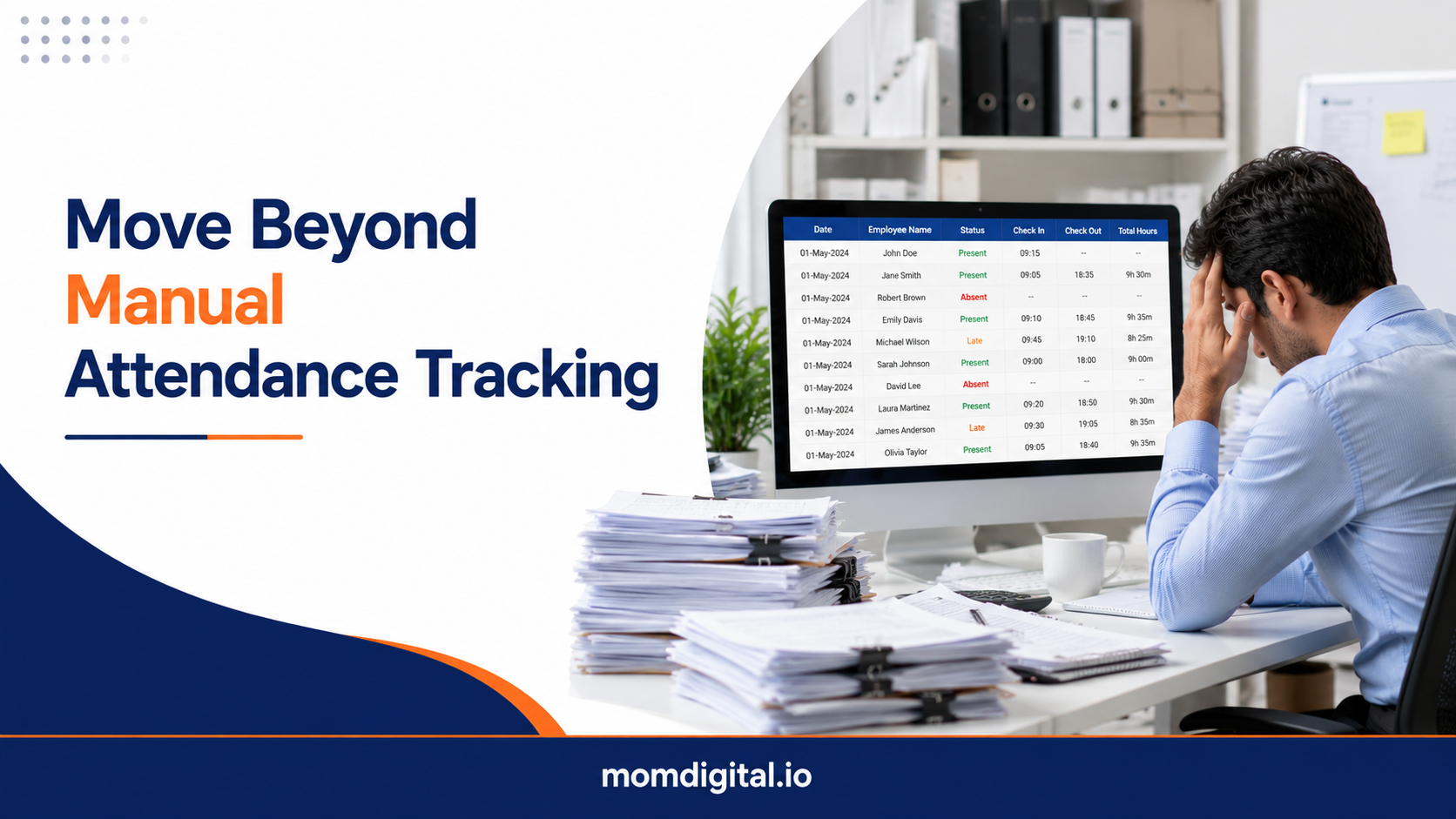
Attendance tracking is one of the most important functions in workforce management. It affects payroll accuracy, employee accountability, productivity, and overall operational efficiency. Yet many businesses still rely on outdated methods such as paper registers, spreadsheets, or manual entries to manage employee attendance.
While these traditional systems may seem manageable in the beginning, they quickly become inefficient as businesses grow. Manual attendance tracking not only consumes valuable time but also increases the risk of errors, delays, and payroll complications.
In today’s fast-moving business environment, organizations cannot afford to waste time on repetitive and outdated processes. Modern HRMS solutions provide automated attendance tracking systems that simplify workforce management and improve overall efficiency.
The Problem with Manual Attendance Tracking
Manual attendance tracking may appear simple, but it creates several operational challenges for businesses.
HR teams often spend hours:
- Recording attendance manually
- Verifying employee timings
- Calculating overtime
- Correcting errors
- Updating spreadsheets
These repetitive tasks reduce productivity and leave little time for strategic HR activities.
As employee numbers increase, managing attendance manually becomes even more difficult and time-consuming.
Common Issues Caused by Manual Systems
1. Human Errors
Manual data entry increases the risk of mistakes. Incorrect attendance records can lead to payroll errors, employee dissatisfaction, and compliance issues.
Even small errors in working hours or overtime calculations can create major problems during salary processing.
2. Time Consumption
HR teams spend a significant amount of time maintaining attendance records manually. Cross-checking data and preparing reports can take hours or even days.
This reduces efficiency and slows down HR operations.
3. Lack of Real-Time Visibility
Manual systems do not provide instant access to attendance information. Managers often struggle to track employee availability, absenteeism, or shift schedules in real time.
This lack of visibility affects workforce planning and decision-making.
4. Buddy Punching and Time Fraud
Traditional attendance systems are more vulnerable to manipulation. Employees may mark attendance for others or alter records, leading to inaccurate tracking.
Without proper monitoring, businesses can lose productivity and payroll accuracy.
5. Payroll Complications
Attendance data directly impacts salary calculations. Manual attendance errors often result in the following:
- Incorrect salary processing
- Overtime miscalculations
- Delayed payroll approvals
These issues can damage employee trust and increase administrative workload.
Why Businesses Need Automated Attendance Tracking
Modern organizations require systems that are fast, accurate, and scalable. Automated attendance tracking solves the limitations of manual methods by providing real-time data and seamless integration with HR operations.
An automated attendance system records employee working hours digitally and stores all data on a centralized platform.
This allows businesses to manage attendance efficiently while reducing manual effort.
Key Benefits of Automated Attendance Tracking
1. Saves Time and Improves Efficiency
Automation eliminates repetitive manual work. Attendance is recorded automatically through biometric devices, mobile apps, or web-based systems.
HR teams no longer need to spend hours updating spreadsheets or verifying records manually.
This allows them to focus on strategic responsibilities instead of administrative tasks.
2. Improves Payroll Accuracy
Automated attendance systems integrate directly with payroll software.
Working hours, overtime, leave balances, and shift schedules are automatically calculated and synced with payroll processing.
This reduces payroll errors and ensures employees are paid accurately and on time.
3. Provides Real-Time Workforce Visibility
Managers can instantly view:
- Employee attendance status
- Shift schedules
- Late arrivals
- Absenteeism trends
Real-time visibility helps organizations make faster decisions and improve workforce management.
4. Reduces Errors and Fraud
Automated systems reduce human errors and eliminate opportunities for buddy punching or attendance manipulation.
Biometric authentication and digital tracking ensure accurate attendance records.
This improves accountability across the organization.
5. Simplifies Shift Management
Managing multiple shifts manually can be complicated, especially for growing businesses.
Automated systems help organizations:
- Assign shifts easily
- Track shift changes
- Monitor overtime efficiently
This ensures smooth workforce scheduling and operational continuity.
6. Supports Remote and Hybrid Work
With remote and hybrid work models becoming more common, businesses need flexible attendance solutions.
Modern attendance systems allow employees to check in remotely using mobile apps or location-based tracking.
This ensures accurate attendance management regardless of where employees are working.
7. Better Compliance and Record Keeping
Labor regulations often require businesses to maintain accurate attendance records.
Automated systems generate reports and maintain secure digital records, helping organizations stay compliant with labor laws and audits.
The Impact on Employee Experience
Employees also benefit from automated attendance systems.
They can:
- View attendance records instantly
- Track working hours
- Check overtime details
- Monitor leave balances
Transparency improves trust and reduces confusion related to salary calculations and attendance disputes.
A smoother employee experience leads to higher satisfaction and engagement.
Why Spreadsheets Are No Longer Enough
Many businesses still depend on spreadsheets for attendance management because they seem affordable and familiar.
However, spreadsheets:
- Require constant manual updates
- Are prone to errors
- Lack automation
- Cannot provide real-time insights
- Become difficult to manage as teams grow
As organizations scale, spreadsheet-based systems become inefficient and unreliable.
Modern HRMS solutions provide a much more effective alternative.
Future-Proofing Workforce Management
Attendance tracking is no longer just about recording employee presence. It has become an essential part of workforce analytics, productivity monitoring, and operational planning.
Businesses that adopt automated attendance systems today are better prepared for future workforce challenges.
By leveraging automation and real-time insights, organizations can improve efficiency, reduce costs, and support long-term growth.
Conclusion
Manual attendance tracking may have worked in the past, but it is no longer suitable for modern businesses that need speed, accuracy, and scalability.
Automated attendance systems simplify workforce management, improve payroll accuracy, reduce administrative workload, and provide valuable real-time insights.
By replacing outdated methods with intelligent automation, businesses can create a more efficient and productive workplace.
With advanced attendance management features integrated into one powerful HRMS platform, MOM Digital helps organizations eliminate manual processes, streamline workforce operations, and build smarter, future-ready HR systems.